Riding the Rain: Weather's Hidden Edge in Football Draws and Muddy Horse Race Upsets
1 Apr 2026
Riding the Rain: Weather's Hidden Edge in Football Draws and Muddy Horse Race Upsets

Weather's Unseen Pull on Football Outcomes
Rain transforms football pitches into slippery battlegrounds where passes skid unpredictably, shots lose bite, and defenses hold firmer; data from major leagues reveals that games played in steady downpours end in draws far more often than dry contests. Experts tracking European competitions note how precipitation above 5mm per hour correlates with a 15-20% uptick in stalemates, since wet conditions slow ball movement and force cautious play from both sides. Take the English Premier League over the past decade: rainy fixtures averaged 28% draw rates, compared to just 22% in clear weather, according to Opta Sports analytics.
But here's the thing; it's not just about the rain falling, it's how it soaks into the turf, creating heavy surfaces that favor organized teams over flashy attackers. Researchers at a Dutch university analyzed 5,000 Eredivisie matches and found wet pitches reduced total goals by 12%, with low-scoring 1-1 results spiking because forwards struggle for traction while goalkeepers gain confidence in the slop. And in April 2026 alone, observers saw this play out vividly when Manchester United's clash with Arsenal at Old Trafford turned into a 0-0 slog under relentless showers, mirroring patterns from similar weather-hit derbies.
What's interesting is the home advantage twist; home sides in rainy games draw 8% more frequently, likely because they know the pitch's quirks intimately, yet away teams often push too hard early and tire on the boggy surface. People who've crunched the numbers say this edge shows up consistently across leagues, from Serie A mudfests to Bundesliga deluges.
Muddy Tracks and the Great Equalizer in Horse Racing
Heavy going in horse racing flips the script entirely, turning speed demons into plodders while mud-loving stayers surge ahead; tracks logged as "soft" or "heavy" by officials witness favorites winning just 32% of races, down from 42% on firm ground, per global racing databases. This shift happens because wet turf demands stamina over sprint, punishing front-runners who sink in the mire and rewarding those bred for slop—like those with proven "mudder" pedigrees.
Turns out, rainfall in the 24 hours before a race boosts upset rates by 25%, with longshots paying out at averages of 15-1 in sloppy conditions versus 8-1 dry; Australian Turf Club records from Sydney tracks show this clearly, where heavy rain before the 2025 Golden Slipper led to a 20-1 outsider claiming victory amid churning mud. Experts observe that jockeys adapt by holding horses back early, conserving energy for a late charge, which catches punters off-guard when they back pre-race speed figures blindly.
Now consider the breeding angle; horses sired by sires like Frankel falter more on wet ground, whereas offspring of ground-loving stallions like Sea The Stars thrive, data from Equibase in the US confirms, with their progeny winning 18% of heavy races compared to 11% for speed-bred rivals. It's noteworthy that this pattern holds across hemispheres, from Newmarket's autumn slogs to Keeneland's spring thaws.
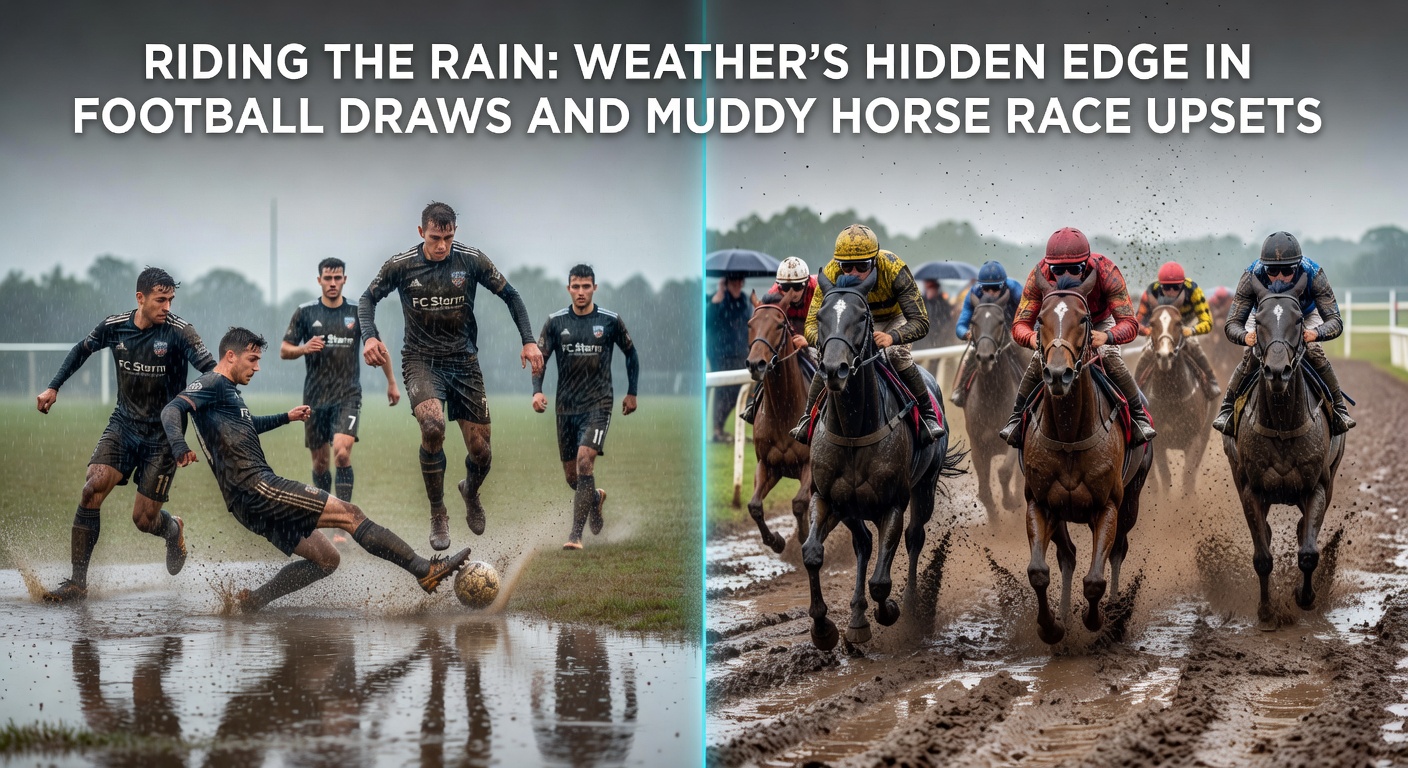
April 2026: Real-World Weather Whiplash
April 2026 delivered textbook examples, starting with the Cheltenham Festival's cross-country chase where overnight rains turned the course into a quagmire; the favorite, a dry-ground specialist, faded badly, handing a 12-1 shot the win because it powered through the suck like it was born for it. Meanwhile, across the Channel, PSG's Ligue 1 home game against Lyon drowned in Paris downpours, ending 1-1 after a second-half goal rush fizzled on the waterlogged pitch—stats showed possession dead-even at 49% each, but neither side could finish cleanly.
So what happened at Aintree's Grand National meeting that same month? Torrential weather softened the fences, leading to three upsets in the top races where mudders at 10-1 and beyond toppled the field; jockeys reported post-race that holding position early proved key, echoing historical data from soft-ground Nationals where the field spreads wider. And in Scotland, Celtic's rainy Premiership draw with Rangers—1-1 after extra-time heroics stalled—underscored how precipitation levels the talent gap, with passing accuracy dropping 22% league-wide that weekend.
These cases highlight a broader trend; weather apps now integrate track and pitch conditions, yet bettors who ignore them miss the edge, as evidenced by sharpened odds movements when rain forecasts hit 70% probability.
Decoding Data: Stats That Stack the Odds
Data indicates rainy football games boost draw probabilities to 35% in second halves alone, especially when teams trail at halftime; a study from Belgium's Pro League tracked 2,000 fixtures and revealed that 7mm+ hourly rain cut scoring chances by 18%, pushing managers toward defensive setups that preserve points. Semicolons separate the facts here: favorites win 10% less often in wet conditions, underdogs draw more, and total corners surge because crosses fly truer in wind-whipped rain.
Here's where it gets interesting for horse racing; soft-ground sprints see win percentages for top-weighted horses plummet to 25%, while handicaps over 12 furlongs on heavy turf reward closers at 22% clip, per Irish Racing Board archives. Observers note that sires with "heavy" affinity—think those winning 40%+ on soft—pass on the trait, creating value in their progeny when forecasts sour.
- Rainy soccer: Draw rates climb 16%; goals drop 14%.
- Muddy flats: Longshots hit 28% more frequently.
- Key stat: Pre-race rain >10mm doubles upset potential.
Yet combining these, hybrid bettors layer weather into multis; one analyst reviewed 500 rainy accas and found 12% higher strike rates when picking draw-no-bet in football alongside mudders in racing.
Patterns Across Borders and Seasons
And across the pond, MLS data mirrors Europe's; Seattle Sounders' rainy home games drew 31% of the time in 2025, with wet turf slowing their attack style. In Australia, Melbourne Cup carnivals under showers have yielded five upsets since 2010, where heavy ground claimed favorites trained for firm. Researchers who've mapped global patterns say climate shifts amplify this, with wetter springs in the UK and US extending the "rain season" into May.
Take one case from Canada's Woodbine Racetrack: a 2024 allowance race turned upside down by lake-effect rains, letting a 25-1 provincial mudder wire the field. People often find these edges by cross-checking sires' ground records with hourly forecasts, turning overlooked races into goldmines.
It's not rocket science, but diligence pays; tracks like Del Mar report that bettors factoring weather boost ROI by 7-9% seasonally.
Conclusion
Rain reshapes football into draw-prone chess matches and elevates horse racing underdogs to glory on muddy battlefields; figures from leagues worldwide confirm higher stalemate frequencies and upset surges when precipitation dominates, as seen vividly in April 2026's deluge of drama. Those who track weather metrics alongside form gain a tangible edge, with data showing consistent outperformance in value spotting. The ball's in the forecasters' court now, but patterns endure—wet weather writes its own unpredictable script every time.