2 Aug 2026
Betfred Plans Closure of 132 Shops as Tax Pressures Mount

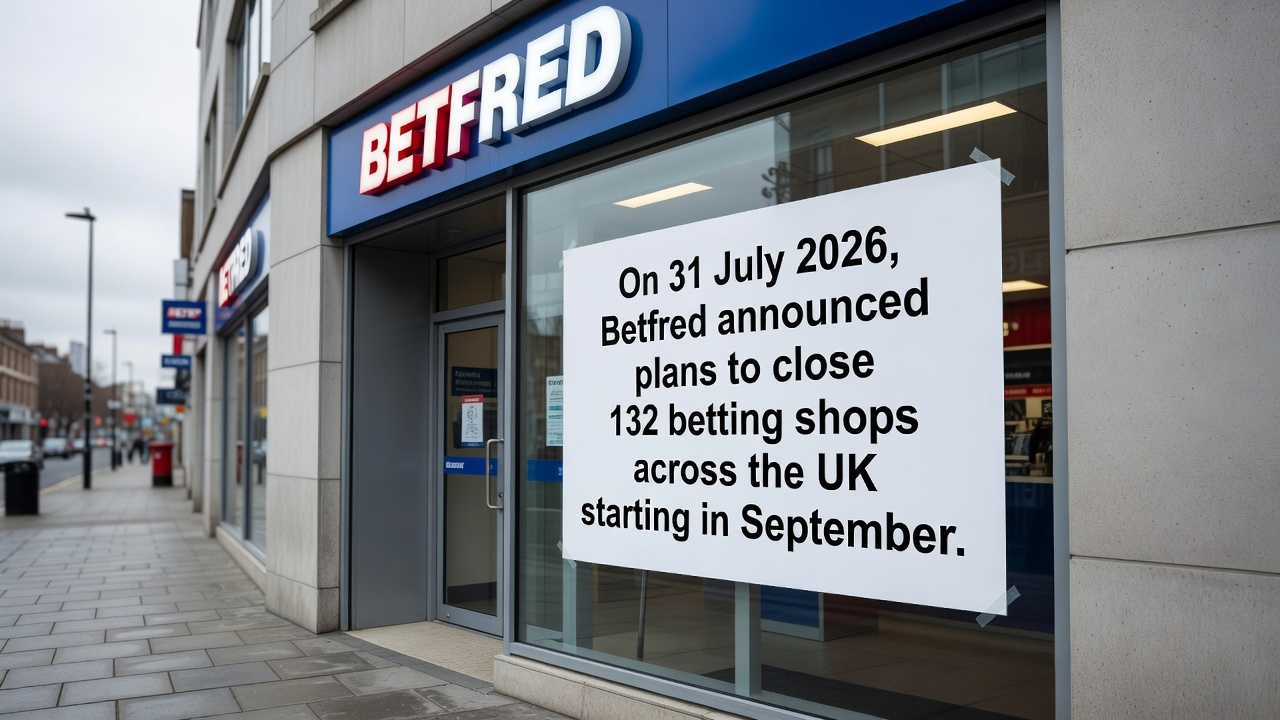
Betfred made its announcement on 31 July 2026 detailing the phased shutdown of 132 betting shops beginning in September 2026 while also confirming more than 600 job reductions, and the company pointed directly to elevated gambling taxes introduced in the previous Budget together with ongoing economic uncertainty as the central factors driving the decision.
The move will trim Betfred’s United Kingdom retail footprint to roughly 1,100 shops once the closures finish, and industry observers note that the reduction forms part of a wider pattern affecting multiple operators facing similar cost pressures.
Scope of the Announced Changes
Shop closures will roll out gradually across England, Scotland, and Wales with the first sites expected to cease trading in early September 2026, and Betfred has stated that affected employees will receive support packages including redundancy payments plus access to redeployment opportunities where available positions exist within the remaining estate.
Those locations selected for closure represent a mix of urban high-street sites and smaller community outlets, and company figures indicate that many of the affected branches have recorded declining footfall in recent quarters amid broader shifts toward online betting platforms.
Economic Factors Cited by the Operator
Betfred attributed the restructuring to the cumulative impact of tax rises implemented after the most recent Budget, and company statements emphasized that these increases have compressed operating margins to a level that renders certain shops commercially unviable.
Economic uncertainty surrounding consumer spending patterns has compounded the situation, and management indicated that the combination of higher tax liabilities and unpredictable revenue streams has prompted a strategic review of the entire retail portfolio.
Consequences for British Horseracing Funding
The planned reduction in Betfred’s physical estate is projected to remove approximately four million pounds annually from the funding stream that supports British horseracing, and levy payments tied to retail betting activity form a significant portion of the sport’s financial base.
Industry analysts tracking the sector have calculated that the lost revenue will primarily affect prize money allocations and development programs, and racing bodies have begun assessing how the shortfall might be offset through alternative revenue sources or cost adjustments.
Industry Body Response and Wider Implications
The Betting and Gaming Council issued a statement framing the Betfred closures as a direct result of government tax policy changes, and the organization warned that similar decisions by other operators could accelerate job losses while also reducing high-street investment across the sector.
According to the BGC: BETFRED CLOSURES SHOW THE REAL COST OF GOVERNMENT TAX RISES release, further shop closures remain likely unless tax structures are revisited, and the council highlighted the potential growth of unregulated black-market betting as consumers seek alternatives outside the licensed framework.
By mid-August 2026, several other major bookmakers had begun internal reviews of their own retail networks in light of the Betfred announcement, and trade publications reported increased discussions around potential consolidation strategies.
Timeline and Next Steps
Betfred confirmed that formal consultation with affected staff commenced immediately after the July announcement, and the company expects the majority of closures to conclude by the end of the first quarter of 2027.
Local authorities and community groups in areas facing shop losses have started to examine the potential effects on town-center footfall, and some councils have indicated they will engage with remaining betting operators to explore mitigation measures.
Conclusion
The Betfred restructuring announced on 31 July 2026 marks a significant contraction in the United Kingdom’s licensed retail betting sector, and the figures released by the operator together with the response from the Betting and Gaming Council illustrate the direct financial consequences of recent tax adjustments on both employment and related industries such as horseracing.
Observers tracking the sector will continue to monitor whether additional operators follow similar paths or whether adjustments in government policy alter the trajectory of future decisions.